Inkjet vs Laser Cost for Beginners: Choose Smart

Choose an ink tank printer for frequent color printing, a laser printer for mostly black-and-white pages at around 100 pages a month or more, and an inkjet printer for light, occasional use. A low shelf price can hide cartridge costs or push you toward a printer that costs more in year one. This guide compares first-year cost, page volume, and color use so you can choose without overspending.
| Decision factor | Inkjet | laser cost for beginners | Winner |
|---|---|---|---|
| Upfront price | Usually lower | Usually higher | Inkjet |
| Black-and-white running cost | Often higher in consumer cartridge models | Often lower for text pages | laser cost for beginners |
| Color running cost | Can rise fast with cartridge use | Often lower than inkjet for mixed text, but still higher than mono | laser cost for beginners |
| Infrequent-use risk | Clogs, cleanings, and wasted ink can add cost | Toner stores well between uses | laser cost for beginners |
| Best fit | Light, occasional printing | Regular text printing | Tie by use case |
What each printer type uses
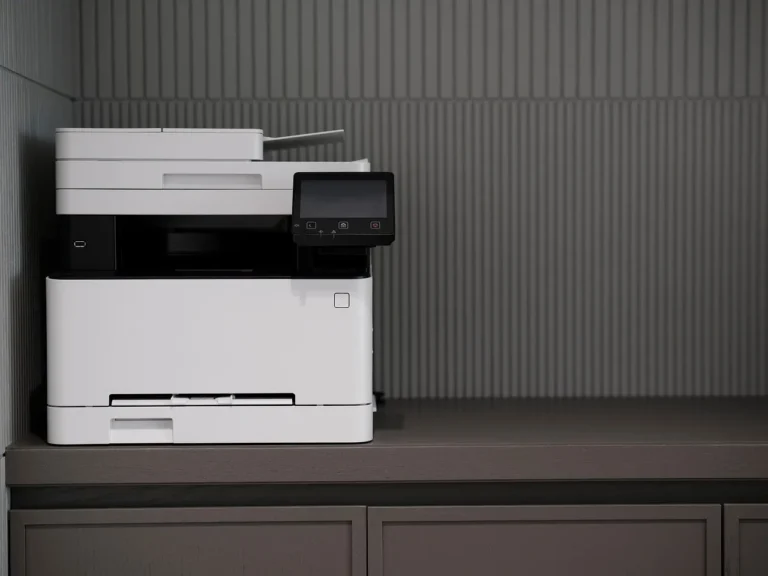
Inkjet printers use liquid ink in cartridges or tanks. Laser printers use toner powder plus a drum and fuser system. In cost terms, the split is simple: inkjets often cost less to buy, while many laser models cost less per page for text.
Inkjet printer
Cartridge inkjets use separate black and color cartridges on many models, and the standard-yield version is often the cheapest printer to buy. The catch is cost per page: once you start replacing cartridges, color pages can become expensive fast. Infrequent use also matters because dried nozzles can trigger cleaning cycles and waste ink.
Laser cost for beginners
Laser printers use toner instead of liquid ink. Toner cartridges usually print more pages than standard ink cartridges, and that lowers black-and-white cost per page in many models. The trade-off is a higher starting price, plus drum or maintenance-kit costs that can show up later.
Ink tank system
An ink tank printer uses refillable reservoirs instead of sealed cartridges. That usually raises the purchase price, but lowers long-run color cost because you refill bottles rather than replace small cartridges. For beginners who print a lot of color, it can be the cheapest total-cost option after the first year.
Upfront price and running cost
Inkjet usually has the lowest shelf price. Laser often has the lowest black-and-white running cost. Ink tank sits between them on purchase price, but often wins on total cost when you print enough pages for the refill savings to matter.
Inkjet printer: consumer inkjet printers often look
Consumer inkjet printers often look cheap on the shelf because the printer body is inexpensive. That does not mean they stay cheap. Standard cartridges can have a higher cost per page than toner, and if you print only once in a while, the printer may spend more time cleaning itself than printing.
Laser cost for beginners: a basic laser printer usually
A basic laser printer usually costs more upfront, but toner’s higher yield often cuts the cost per black-and-white page. That matters most if your pages are mostly text. If you print only a few pages every month, the higher purchase price can take a long time to recover.
Ink tank system: ink tank printers cost more
Ink tank printers cost more than cartridge inkjets because the printer includes refillable reservoirs and the refill bottles are part of the plan from day one. The payoff is lower consumable cost, especially for color pages. If your workload is steady, the first-year total can beat both cartridge inkjet and laser.
Printer cost calculator
The calculator below uses a simple first-year formula: printer price plus one year of page costs plus a small maintenance allowance. Page cost is calculated from black-and-white CPP and color CPP, where CPP means consumables only unless stated otherwise. The color share in each scenario is an estimate so you can see how mix changes the result.
- Estimate your monthly pages. Count how many sheets you expect to print in a normal month, then multiply by 12. A printer rated for far more than your real volume is usually wasted money for a beginner.
- Split black and color pages. Decide what share of pages need color. Color frequency matters because color CPP is often much higher than black-and-white CPP.
- Apply the CPP formula. Multiply annual mono pages by mono CPP and annual color pages by color CPP, then add the printer price and any maintenance allowance. This gives a first-year total that is easier to compare than shelf price alone.
| Scenario | Printer type | Purchase price | Black-and-white CPP | Color CPP | Estimated first-year total cost |
|---|---|---|---|---|---|
| 20 pages/month | Inkjet | $70 | $0.08 | $0.20 | $116.08 |
| 20 pages/month | laser cost for beginners | $130 | $0.04 | $0.14 | $152.00 |
| 20 pages/month | Ink tank | $200 | $0.03 | $0.06 | $215.92 |
| 100 pages/month | Inkjet | $70 | $0.08 | $0.20 | $206.80 |
| 100 pages/month | laser cost for beginners | $130 | $0.04 | $0.14 | $217.00 |
| 100 pages/month | Ink tank | $200 | $0.03 | $0.06 | $255.20 |
| 300 pages/month | Inkjet | $70 | $0.08 | $0.20 | $493.60 |
| 300 pages/month | laser cost for beginners | $130 | $0.04 | $0.14 | $407.00 |
| 300 pages/month | Ink tank | $200 | $0.03 | $0.06 | $358.40 |
20 pages per month
At 20 pages a month, inkjet comes out cheapest in the first year because the low purchase price matters more than the running cost. Laser does not recover its higher upfront price at this volume. Ink tank is the most expensive here because the refill savings do not have enough pages to offset the starting price.
100 pages per month
At 100 pages a month, the gap narrows. Inkjet still leads on first-year total cost in this calculator, but laser is close and becomes more attractive if most of those pages are text. This is the point where buying by shelf price alone starts to fail.
300 pages per month
At 300 pages a month, laser beats inkjet on first-year total cost, and ink tank beats both. That happens because consumable cost starts to dominate the purchase price. If you print that much, the cheap printer body is often the expensive choice.
What hidden costs change the answer?
Hidden costs can flip the result. Cleaning cycles, wasted ink, drum replacement, and maintenance kits all matter, especially when you print less often or print enough for the wear parts to show up inside year one. If you ignore those costs, the cheapest printer on the shelf may cost more to own.
Cleaning cycles and wasted ink
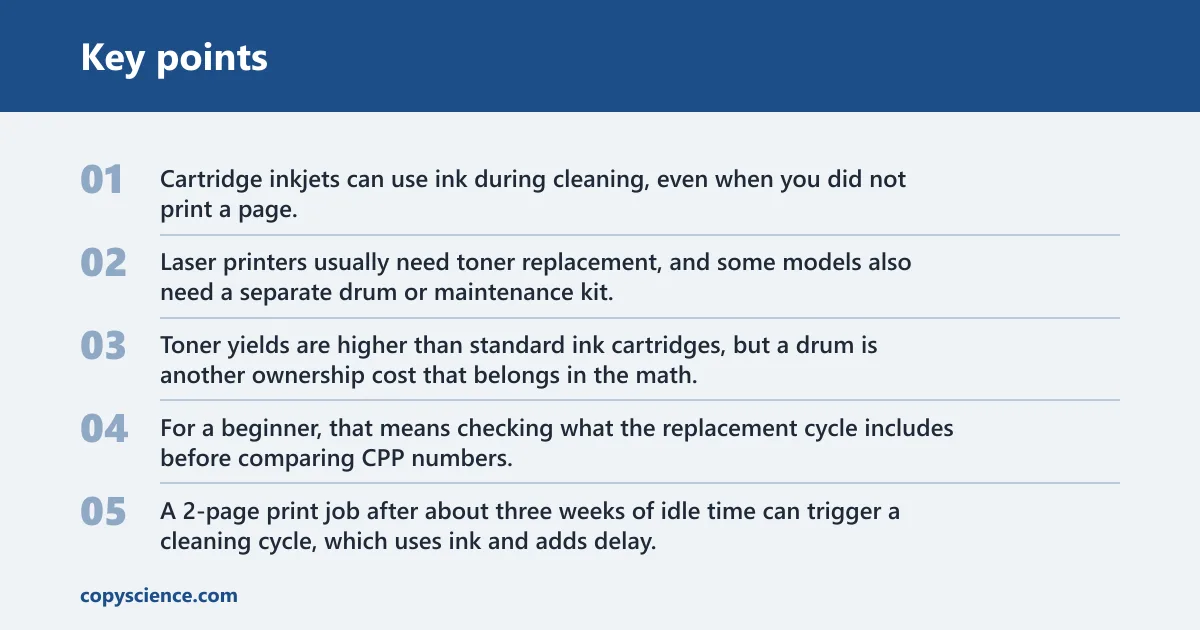
Cartridge inkjets can use ink during cleaning, even when you did not print a page. That hidden use is one reason infrequent printing is expensive. A beginner who prints a few pages, then leaves the printer idle for weeks, can pay for cleaning and wasted ink before the next document even starts.
Drums, fusers, and maintenance kits
Laser printers usually need toner replacement, and some models also need a separate drum or maintenance kit. Toner yields are higher than standard ink cartridges, but a drum is another ownership cost that belongs in the math. For a beginner, that means checking what the replacement cycle includes before comparing CPP numbers.
Why infrequent use matters
A common first-timer mistake is buying the cheapest cartridge inkjet for a school form or lease document and then using it once a month. A 2-page print job after about three weeks of idle time can trigger a cleaning cycle, which uses ink and adds delay. That is why low print frequency changes the cost picture so much.
Which printer is cheaper for low-volume use?
For a few pages a month, inkjet is usually the cheapest to buy and often the cheapest first-year choice. The lower shelf price matters more than long-run consumables when your total volume is tiny. Laser only starts to make sense if you need reliable text printing and expect the pages to add up.
A few pages a month
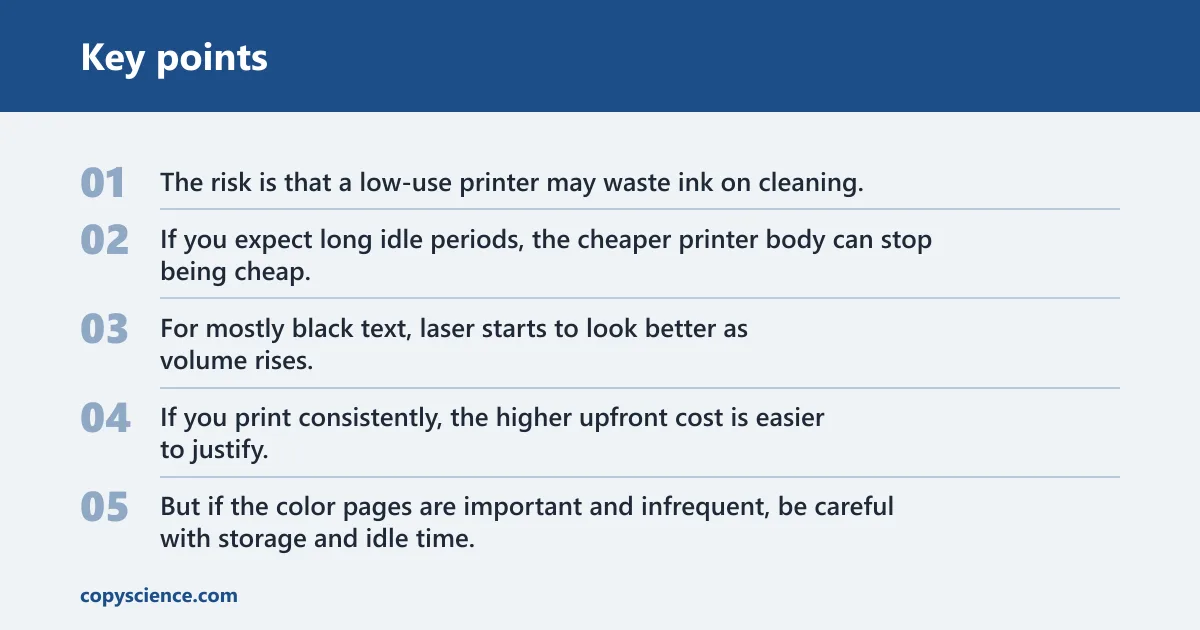
If you print tax forms, return labels, or a homework sheet once in a while, a basic cartridge inkjet can be the right buy. The risk is that a low-use printer may waste ink on cleaning. If you expect long idle periods, the cheaper printer body can stop being cheap.
Mostly black-and-white pages
For mostly black text, laser starts to look better as volume rises. Toner’s lower mono CPP gives it a real advantage on text-heavy printing, and you avoid the dry-out problem that hits idle inkjet nozzles. If you print consistently, the higher upfront cost is easier to justify.
Rare color printing
If you print color only a few times a year, a cartridge inkjet can still be the practical choice because you do not need to pay for laser’s higher entry cost. But if the color pages are important and infrequent, be careful with storage and idle time. Color frequency changes the answer more than many beginners expect.
Which printer is cheaper for heavier use?
At heavier volumes, laser often beats cartridge inkjet on total cost, and ink tank can beat both when color is part of the load. The more pages you print, the less the purchase price matters and the more CPP controls the result. That is where first-year cost becomes more useful than shelf price.
Frequent text printing
If most of your pages are text and you print often, laser usually becomes the safer cost pick. Lower mono CPP and stable toner storage help reduce surprises. A cheap laser can still be a bad buy, though, if your real page volume is too low to recover the higher starting price.
Regular color printing
Regular color printing is where ink tank often pulls ahead. It keeps color CPP low enough to matter, especially compared with cartridge inkjets. Laser can handle color, but color toner tends to cost more than monochrome toner, so the savings are smaller than many beginners expect.
When ink tank wins
Ink tank wins when you print enough color or mixed pages for refill bottles to beat the cost of repeated cartridge swaps. In this calculator, that happens clearly at 300 pages a month. If your volume is steady and color is common, the higher purchase price becomes the better long-term bet.
Choose Inkjet if… / Choose laser cost for beginners if…
Choose Inkjet if your monthly volume is low, your pages are mostly occasional black-and-white documents, and you want the lowest upfront price. Choose laser cost for beginners if you print text often, want lower black-and-white CPP, and expect your pages to total enough each month to justify the higher starting cost. Choose ink tank if color printing is regular and total first-year cost matters more than shelf price.
- Choose Inkjet if you print a few pages a month. The low purchase price helps most when the printer sits idle for long stretches and total annual pages stay small.
- Choose Inkjet if you need the lowest entry cost. That matters for a student or home user who wants the cheapest way to print an occasional form or assignment.
- Choose laser cost for beginners if you print mostly text. Lower mono CPP and better idle storage make it the better fit once pages start piling up.
- Choose laser cost for beginners if you print often enough to care about CPP. Around 100 pages a month and up, the running cost starts to matter more than the purchase price.
- Choose ink tank if color is routine. It can beat both cartridge inkjet and laser on first-year total cost when the monthly volume is high enough.
Frequently asked questions
Is an inkjet or laser printer cheaper for beginners?
Inkjet is often cheaper to buy, while laser is often cheaper to run for black-and-white pages. For beginners, the right answer depends on monthly volume and color use. A light user often saves money with inkjet, but a heavier text user can spend less overall with laser.
What is the cheapest printer to buy and run for occasional use?
A basic cartridge inkjet is often the cheapest to buy, and often the cheapest for very occasional printing. The risk is hidden ink use from cleaning cycles after idle periods. If you print only a few pages a month, low entry price matters more than running cost.
How much does ink cost compared with toner over time?
Ink often costs more per page than toner in consumer models, especially for color. Toner cartridges usually print more pages, so the per-page cost can be lower even though the cartridge price is higher. That is why laser often wins for text-heavy use over time.
Which printer is better if I only print a few pages a month?
For only a few pages a month, inkjet is often the better fit because the purchase price is lower. The trade-off is possible clogging and cleaning waste if the printer sits idle. If your pages are mostly text and you want fewer maintenance surprises, laser is worth a look.
Do laser printers save money if I print in color?
Sometimes, but not always. Color laser usually costs more than monochrome laser to buy and run, so the savings are smaller than for black-and-white printing. If color is frequent, ink tank often offers lower first-year cost than either cartridge inkjet or color laser.
What hidden costs should I consider besides the printer price?
Look at ink or toner replacements, drum or maintenance-kit costs, cleaning cycles, and wasted pages. For inkjets, idle time can raise cost through cleaning and dry-out. For lasers, a separate drum or fuser can add cost later, so the cheapest front panel price may be misleading.
Is an ink tank printer a better option than inkjet or laser?
Yes, if you print enough color for refill bottles to matter. Ink tank often costs more upfront than a cartridge inkjet, but less to run over time. For very light use, the higher starting price may not pay off. For steady use, it can be the lowest-cost option.
How do I calculate cost per page before buying a printer?
Divide the consumable price by the rated yield to get CPP, then separate black-and-white pages from color pages. Add printer price and likely maintenance costs for a first-year total. That simple calculation is better than choosing by shelf price alone because it shows the real ownership cost.