
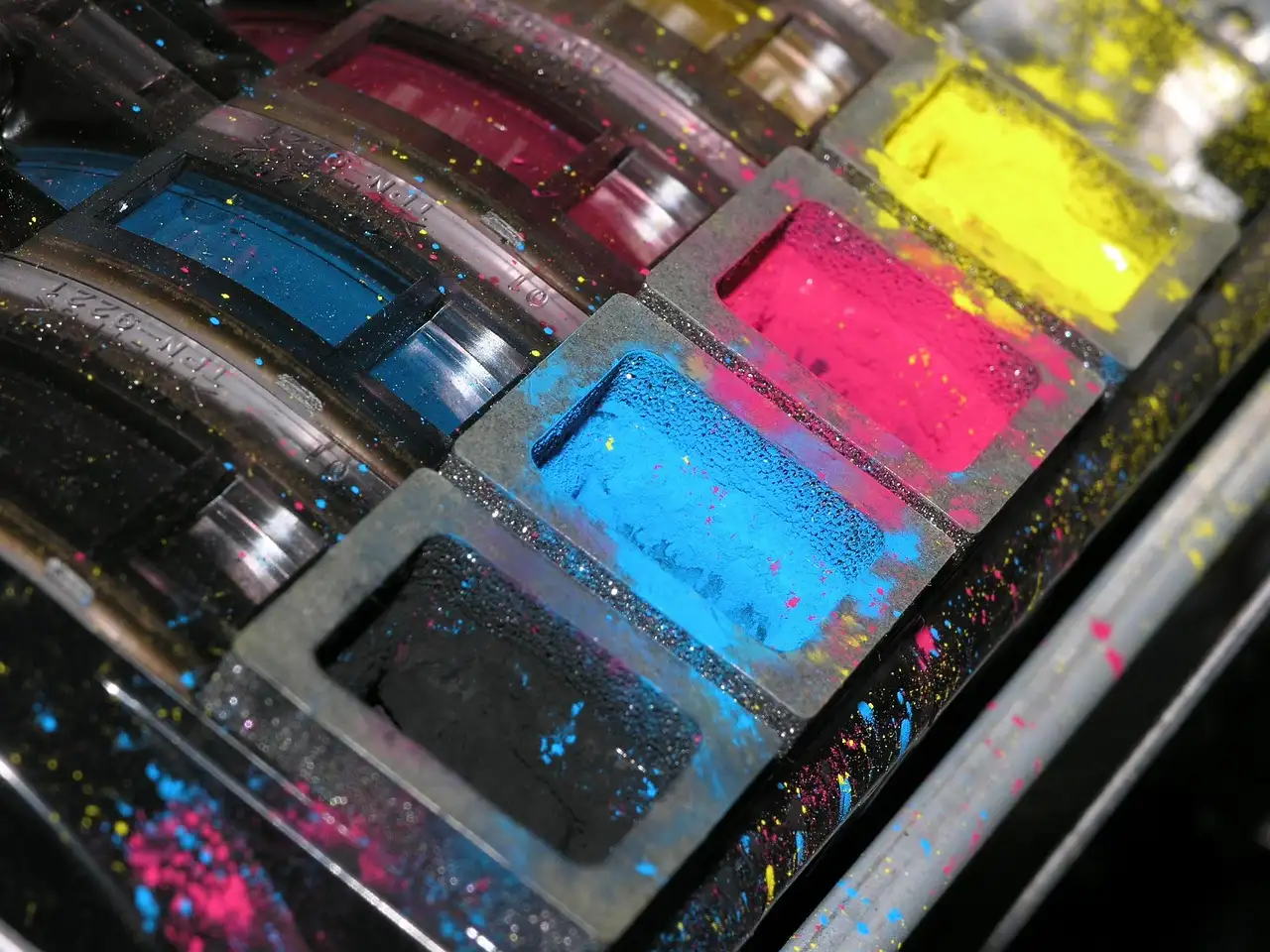
Why is printer ink so expensive and how to avoid high costs?

Printer ink is expensive because low-capacity cartridges subsidize printer hardware, and the cheapest long-term choice is usually a refillable tank system if you print more than about 50 pages a month. Skip that math, and you can spend more on ink than on the printer itself. This guide explains the cost drivers and shows how to pick the lowest-cost setup for your print volume.
Why cartridges cost more than the printer
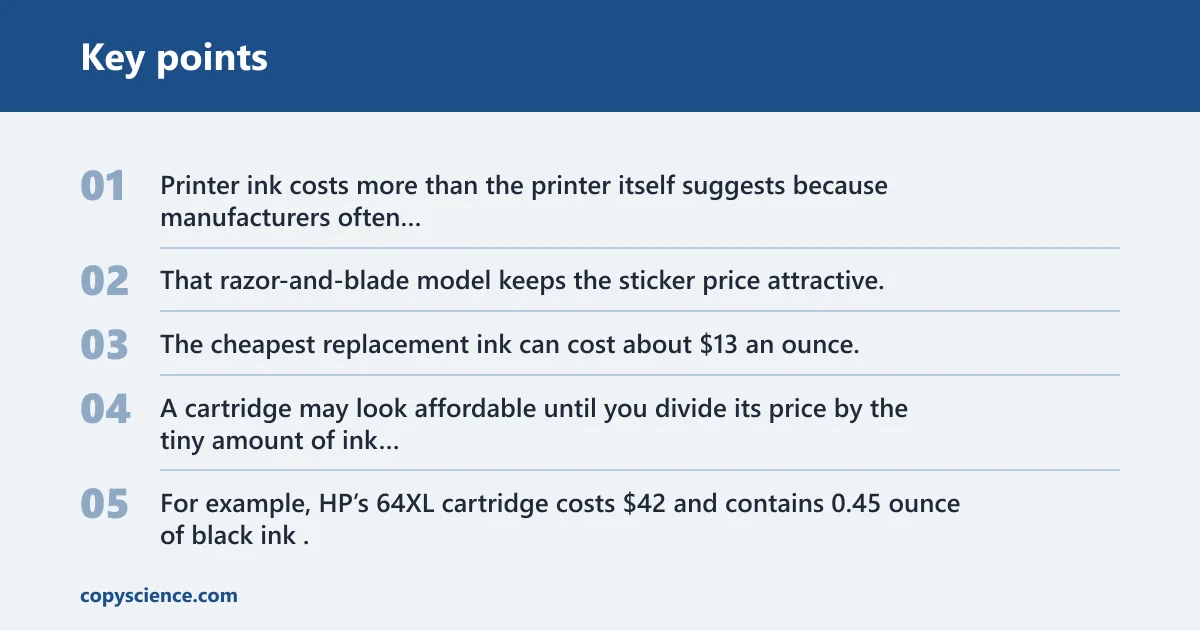
Printer ink costs more than the printer itself suggests because manufacturers often price the machine low and recover profit through replacement supplies. That razor-and-blade model keeps the sticker price attractive, then shifts the real expense to cartridges, chips, and refills.
Ink is also sold in small volumes. The cheapest replacement ink can cost about $13 an ounce, while the priciest replacement ink can approach $95 an ounce. A cartridge may look affordable until you divide its price by the tiny amount of ink inside it.
For example, HP’s 64XL cartridge costs $42 and contains 0.45 ounce of black ink. HP’s 952XL cartridge costs $44 and contains 2.86 ounces, which works out to $15.38 per ounce. Same brand. Very different economics.
The other piece is lock-in. Cartridge shape, chip design, and printer firmware can limit what fits and what the printer accepts. That means the low-cost printer on the shelf may carry expensive ownership costs once you start buying ink.
Why printer prices and ink prices move in opposite directions
Low printer prices can be a sales tactic, not a sign of low lifetime cost. A manufacturer can sell the printer cheaply if the replacement cartridge stream is profitable enough to make up the difference later.
That matters most when you print only a little. If your household prints a few pages a week, the printer may sit idle while ink ages, dries, and gets flushed through maintenance cycles. The machine feels inexpensive at checkout, then expensive over time.
How supply profits and consumer lock-in shape cartridge pricing
Cartridge pricing is shaped by supply profit, chip authentication, and model-specific fit. A cartridge that looks similar from the outside may still fail because the printer checks the chip, the firmware, or the exact shell shape.
That is why compatible cartridges can be cheaper but still risky. The savings can disappear if the printer rejects the cartridge, prints poorly, or triggers repeated cleaning cycles.
What makes printer ink cost so much per page?
Cost per page depends on cartridge size, page coverage, and how much ink the printer burns on upkeep. Black pages usually cost less than color pages, but the real total should also include maintenance ink and replacement supply cost.
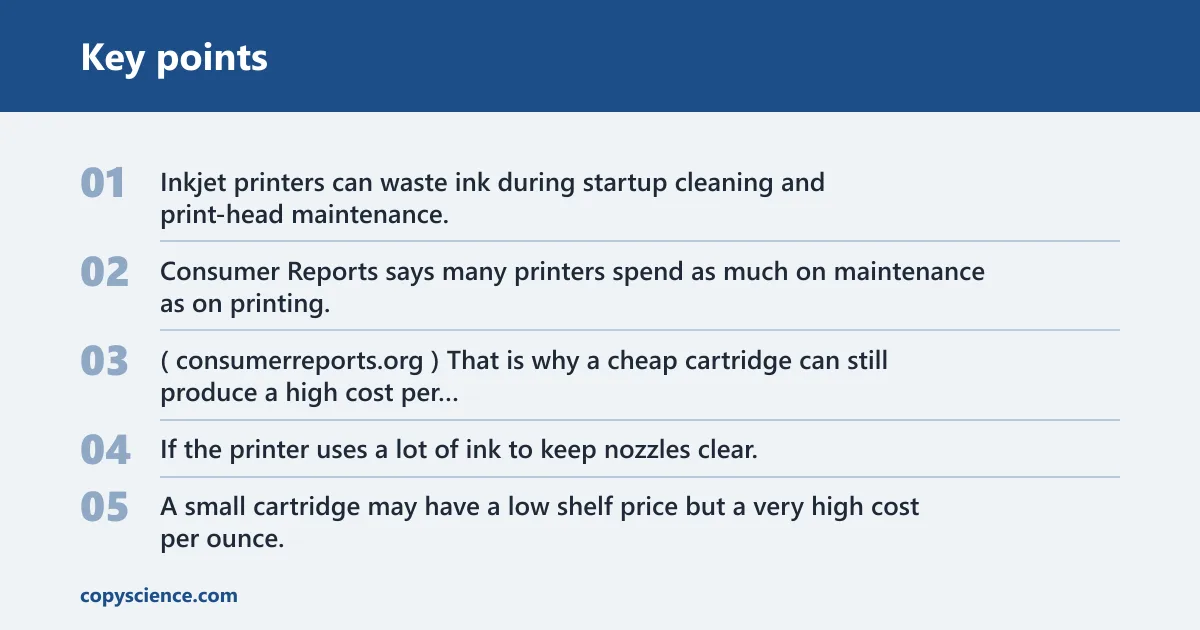
Inkjet printers can waste ink during startup cleaning and print-head maintenance. Consumer Reports says many printers spend as much on maintenance as on printing, and some inefficient inkjet printers can cost more than $100 a year in added ink expense. (Consumerreports)
That is why a cheap cartridge can still produce a high cost per page. If the printer uses a lot of ink to keep nozzles clear, the money goes into the waste path before it reaches the paper.
Cartridge size, ounces, and cost per ounce
Compare cartridge size first. A small cartridge may have a low shelf price but a very high cost per ounce. A larger cartridge can look expensive, yet still cost less per ounce and per page.
Those per-ounce numbers are where the real comparison starts. The gap between $13 an ounce and $95 an ounce is large enough to change the total ownership cost of the printer itself.
Black versus color pages
Black text pages are usually the cheapest output. Color pages often use multiple cartridges, and photos can consume far more ink than plain documents. If your printing mix includes charts, school projects, or images, color cost matters quickly.
A household that prints mostly forms and shipping labels should not buy based on photo performance alone. A family that prints photos or colorful schoolwork needs to weigh the higher color cost against the convenience of doing it at home.
Maintenance ink and startup cleaning cycles
Maintenance ink is the hidden line item many buyers miss. The printer may use ink for nozzle checks, head cleaning, and startup cycles, especially after idle periods. Some models used only 20 to 30 percent of their ink on the page.
Some printers can waste more than half their ink during intermittent use. That is why a machine with a cheap cartridge can still be costly for a household that prints only once in a while.
Why does my printer use ink when I am not printing?
Your printer uses ink when idle because inkjet heads can clog. To prevent that, the printer runs cleaning routines, purges nozzles, and keeps the system ready for the next job. If you print infrequently, those cycles can use a meaningful share of the cartridge.
Intermittent-use waste is a real cost driver. The less often you print, the more likely you are to pay for upkeep instead of output. In a home office, that can make ownership cost higher than the cartridge price suggests.
Print-head cleaning and clog prevention
Print heads need regular movement and periodic cleaning. If ink dries in the nozzles, the printer may need extra cleaning passes or a purge cycle before it can print well again. That keeps print quality up, but it burns ink.
Picture a printer that sits unused for two weeks. The next time you print a single document, the machine may spend part of its first cycle cleaning itself. That cleaning ink is part of the true cost of printing at home.
How idle time changes real ownership cost
Idle time changes ownership cost because the printer is still consuming consumables while it waits. A household that prints several pages every day may get better value from a cartridge printer than a household that prints a few pages a month.
Say your home printer sits on a shelf and only wakes up for tax season, school forms, and the occasional shipping label. The machine may be inexpensive, but the ink can age out, dry out, and disappear into cleaning cycles before much ever reaches the page.
Ink cost decision table
This table maps print volume to the cheapest long-term path, plus the hidden costs that usually show up later. Use it to judge the printer architecture, not only the sticker price.
| Printing pattern | Likely cheapest path | Why it tends to win | Likely hidden costs | Best fit |
|---|---|---|---|---|
| Low-volume: fewer than about 50 pages a month | Cartridge printer with low upfront cost, but only if ink cost per page is reasonable | Lower purchase price matters more when ink use is small | Maintenance ink, cartridge replacement frequency, dry-out risk, compatibility risk with third-party cartridges | Households that print a few forms, labels, or homework pages |
| Moderate-volume: about 50 to 200 pages a month | Printer with larger cartridges or a midrange tank printer | Ink cost per page starts to dominate the total cost | Startup cleaning cycles, black and color supply replacement, chip checks, higher cost for color-heavy jobs | Home offices, schoolwork, mixed document use |
| High-volume: more than 200 pages a month | Ink tank printer | Refill bottles are much cheaper per ounce than cartridges | Higher upfront printer price, occasional maintenance, bottle management, possible print-head care | Frequent printing, large document runs, and regular color use |
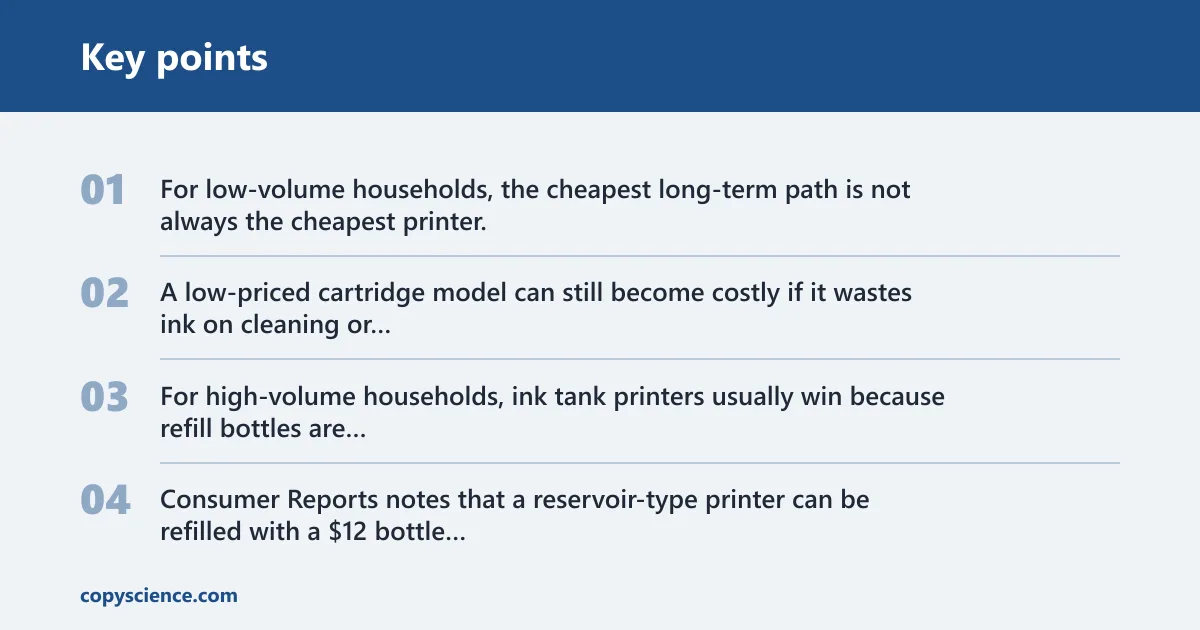
For low-volume households, the cheapest long-term path is not always the cheapest printer. A low-priced cartridge model can still become costly if it wastes ink on cleaning or uses tiny cartridges that need frequent replacement.
For high-volume households, ink tank printers usually win because refill bottles are cheaper than cartridges. The same source notes that a reservoir-type printer can be refilled with a $12 bottle of ink, and that refill bottle works out to about $4 per ounce.
Are ink tank printers cheaper in the long run?
Ink tank printers are usually cheaper in the long run for higher-volume households because they store ink in refillable reservoirs instead of tiny sealed cartridges. That lowers the cost per ounce, reduces replacement frequency, and usually cuts the cost per page.
Consumer Reports recommended the Canon Pixma G4210 at $299 as a reservoir-style option. That higher upfront price can still make sense if you print often enough to use the cheaper bottle refills.
Refillable reservoirs and bottle refill systems
Tank printers use bottles instead of small cartridges. That shifts the economics from frequent cartridge replacement to occasional reservoir refills. The ink itself is still ink, but the packaging and delivery system are less expensive per ounce.
This matters most when pages add up. If you print enough to burn through cartridges quickly, the bottle system usually brings the lifetime cost down.
Who should avoid paying more upfront?
Very light users may not recover the higher purchase price of a tank printer. If you print only a few pages a month, the extra upfront cost may sit there unused while a simpler cartridge machine would have been enough.
In that case, the better move is often a modest printer with acceptable cartridge pricing, good idle behavior, and straightforward compatibility. The goal is the lowest ownership cost, not the lowest shelf price.
Do compatible or remanufactured cartridges save money?
They can save money, but the savings depend on printer model, chip behavior, and seller quality. Compatible cartridges are newly made alternatives; remanufactured cartridges reuse a shell. Both may cost less than OEM ink, and both carry some risk.
The main tradeoff is hidden cost. A cheaper cartridge that jams, leaks, or triggers repeated cleaning can erase the savings. A cartridge that is rejected by firmware saves nothing at all.
Compatible cartridges: lower price, model dependence, and risk
Compatible cartridges are usually cheaper than OEM cartridges and can work well in the right printer. The catch is compatibility checks. Some printers depend heavily on exact cartridge model matching and chip authentication.
That means the same compatible cartridge can work in one printer and fail in another. Before buying, confirm the exact printer model, cartridge code, and return policy.
Remanufactured cartridges: reused shells and quality variability
Remanufactured cartridges reuse the original shell and are refilled or rebuilt. They can be a real savings option, but quality varies by seller, remanufacturing process, and cartridge design.
A reused shell may not seal as well as a new OEM cartridge. That can affect print quality, cause leaks, or lead to extra maintenance cycles. The price may still be worth it, but only if the seller’s consistency is solid.
What to check before buying third-party ink
- Match the exact printer model and cartridge number.
- Check whether the printer uses chip authentication.
- Read the seller’s replacement and return policy.
- Compare cost per page, not just cartridge price.
- Watch for reports of clogging, streaking, or rejection after updates.
How can I lower my ink cost per page without ruining print quality?
Start by comparing cost per page before you buy the printer, then choose a model whose ink system matches your volume. The best savings come from picking the right architecture first, then using the right settings and supplies.
Lowering cost does not mean accepting poor output. It means avoiding waste, choosing the right cartridge type, and using the printer in a way that fits its design.
Choose printer features that reduce waste
Look for features that cut idle waste and maintenance use. Good sleep behavior, sensible startup routines, and efficient cartridges matter more than a low sticker price when the printer will sit unused between jobs.
If you print often, tank printers and larger supply systems usually win. If you print rarely, a printer with modest upkeep and reliable cartridges may be the safer buy.
Decide when to pay more upfront for cheaper ink
A higher upfront price can be the cheaper choice if it buys lower ink costs over time. That is often true for tank printers and for cartridge models with larger, better-priced supplies.
Cheap printers can become expensive once maintenance ink, replacement frequency, and cartridge size are counted. Compare total ownership cost, not only the machine price.
Why do some printers reject third-party cartridges after firmware updates?
Some printers reject third-party cartridges because firmware can change cartridge authentication rules. A firmware update may improve security or fix bugs, but it can also block cartridges the printer used to accept.
That creates a tradeoff. Keeping firmware updated may bring useful fixes, yet it can also limit low-cost ink options. If you rely on compatible cartridges, check update notes before installing new firmware.
Cartridge chips and security update tradeoffs
Many modern cartridges include chips that report identity, ink level, or readiness. If the firmware no longer trusts that chip, the printer may stop printing or warn repeatedly.
The practical result is simple: a cheaper cartridge can become unusable after an update. That risk should be part of the buying decision, especially for households planning to use third-party ink.
Frequently asked questions
Why is printer ink so expensive compared with the printer itself?
Printer makers often sell the printer at a low margin and recover profit on replacement supplies. That makes the machine look affordable up front while the cartridges, chips, and maintenance ink carry the long-term cost. The same source describes this as a classic razor-and-blade model.
How much does printer ink cost per ounce or per gallon?
The cheapest replacement ink can cost about $13 an ounce, while the priciest replacement ink can approach $95 an ounce. On a gallon basis, that is a very wide spread. The exact figure depends on cartridge model, ink type, and whether you buy OEM, compatible, or refill bottle ink.
Why does my printer use ink even when I am not printing?
Inkjet printers use ink for print-head cleaning, startup cycles, and clog prevention. That hidden consumption becomes more important with intermittent use. Some printers can waste more than half their ink during intermittent use, so idle time can raise real ownership cost fast.
Is an ink tank printer cheaper than a cartridge printer?
Usually yes for higher-volume households, because refill bottles are much cheaper per ounce than cartridges. The same source says a reservoir-type printer can be refilled with a $12 bottle of ink, which works out to about $4 per ounce. For very light use, the higher upfront price may not pay off.
Do compatible or remanufactured cartridges really save money?
They can, but only if the printer accepts them reliably. Compatible cartridges may be cheaper yet carry model dependence and chip-authentication risk. Remanufactured cartridges can also save money, but quality varies by seller and cartridge model, so check fit, return terms, and user reports first.
